The liquid & fine particle advantage

Apply less nitrogen, more often.

Dissolve your urea and spray it straight onto the leaf, a little at a time, when the plant can use it.

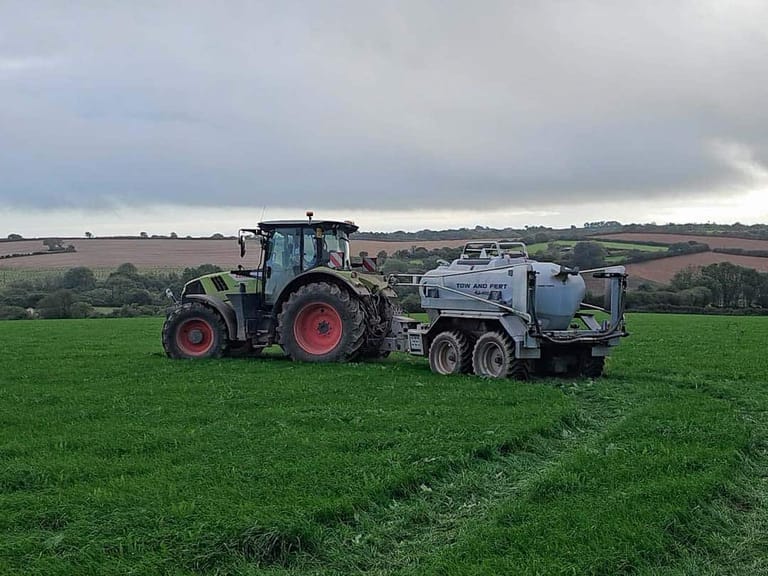
Interested in a Tow and Fert for your operation?

Get a free info pack or book a demo with our team.

Where the difference comes from

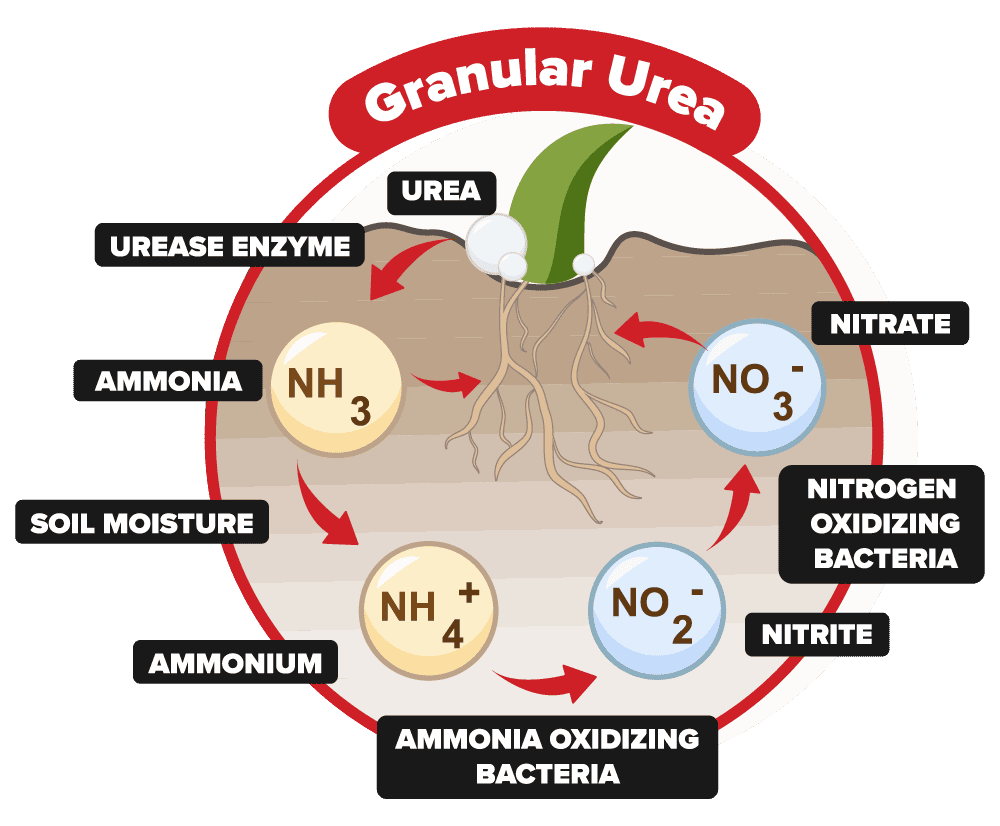
Granular Urea Pathway

Granular Urea Pathway

  1. Dry urea granules sit on the soil surface after spreading.
  2. Soil urease converts urea to ammonia, which becomes ammonium in soil moisture.
  3. Nitrifying microbes first oxidise ammonium into nitrite in the soil.
  4. Other microbes then convert nitrite into nitrate, completing nitrification.
  5. Roots absorb ammonium and nitrate from the soil solution.
  6. The plant spends more energy turning the nitrate fraction into amino acids and proteins.

Six steps. The middle ones lean on soil moisture, temperature and microbes, which is where nitrogen gases off, leaches or gets lost.
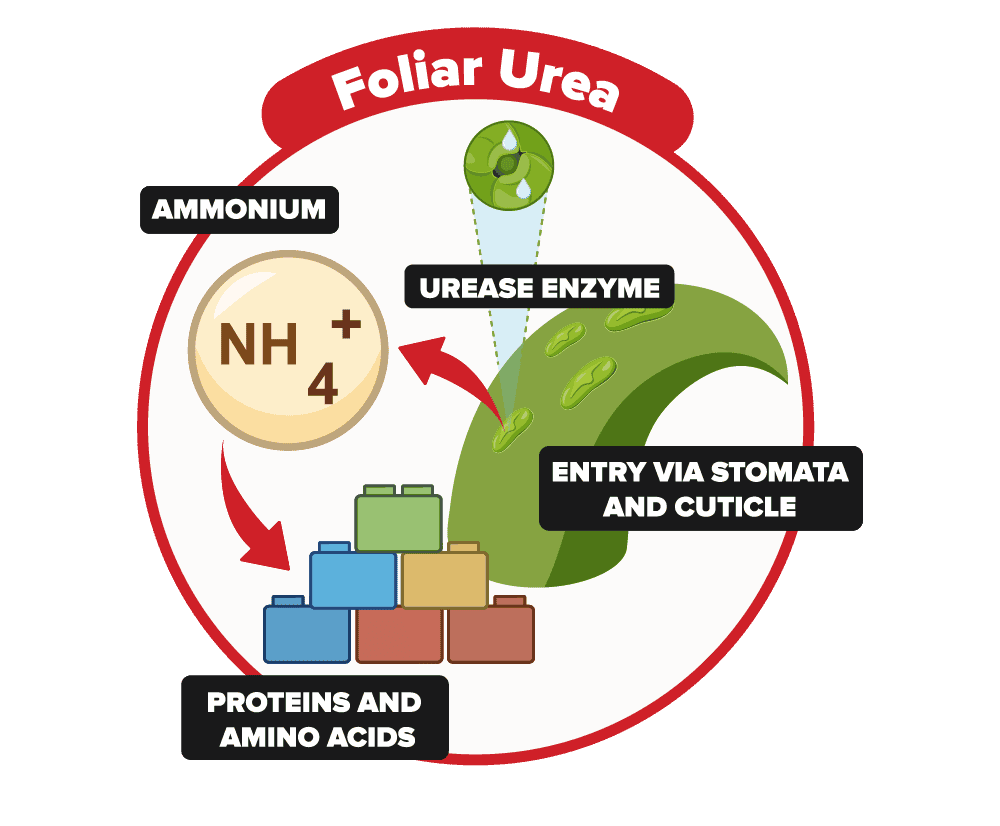
Foliar Urea Pathway

Foliar Urea Pathway

  1. Fine urea spray lands on the leaf and moves in through stomata and cuticle.
  2. Leaf urease enzymes turn urea straight into plant‑ready ammonium inside the leaf.
  3. That ammonium is built straight into amino acids and proteins, a cheaper build for the plant.

Three steps, for the nitrogen the leaf actually takes up. Whatever it can’t use in that pass lands on the soil and rejoins the pathway on the left, which is why rate per pass matters

Where nitrogen gets lost

How much is lost depends on the weather, the soil, how it goes on and when.

Volatilisation

Urea turns to ammonia gas and drifts off. Worst on moist soil that dries slowly with no decent rain to wash it in.

Leaching

Nitrate drains down below the roots. Worst on free-draining soils after heavy rain.

Denitrification

Soil microbes turn nitrate into gas. Worst in wet, waterlogged soils short of oxygen.

Why it works: little and often

Large single applications are at the mercy of the weather. If it turns wet, nitrate can leach. If it turns warm, urea can gas off. If soils are compacted or waterlogged, more is lost to denitrification. Smaller, more frequent applications put less nitrogen at risk on any one day, because less is sitting in the soil waiting for something to go wrong. Pasture demand rises and falls through the season, so a little at each round follows it more closely than a big hit every few months. What that adds up to on your place depends on your soils, covers and weather. That’s why we’d rather show you on your own paddock.

Per pass

10–20 kg N/ha

Matched to what the leaf can take

Per year

8–10 passes

Timed to follow the grazing round

See it on your paddock

We'll bring a Tow and Fert to your farm, mix a tank with your inputs, and spray a paddock so you can judge for yourself.

Book a free on-farm demo

No cost. No obligation.