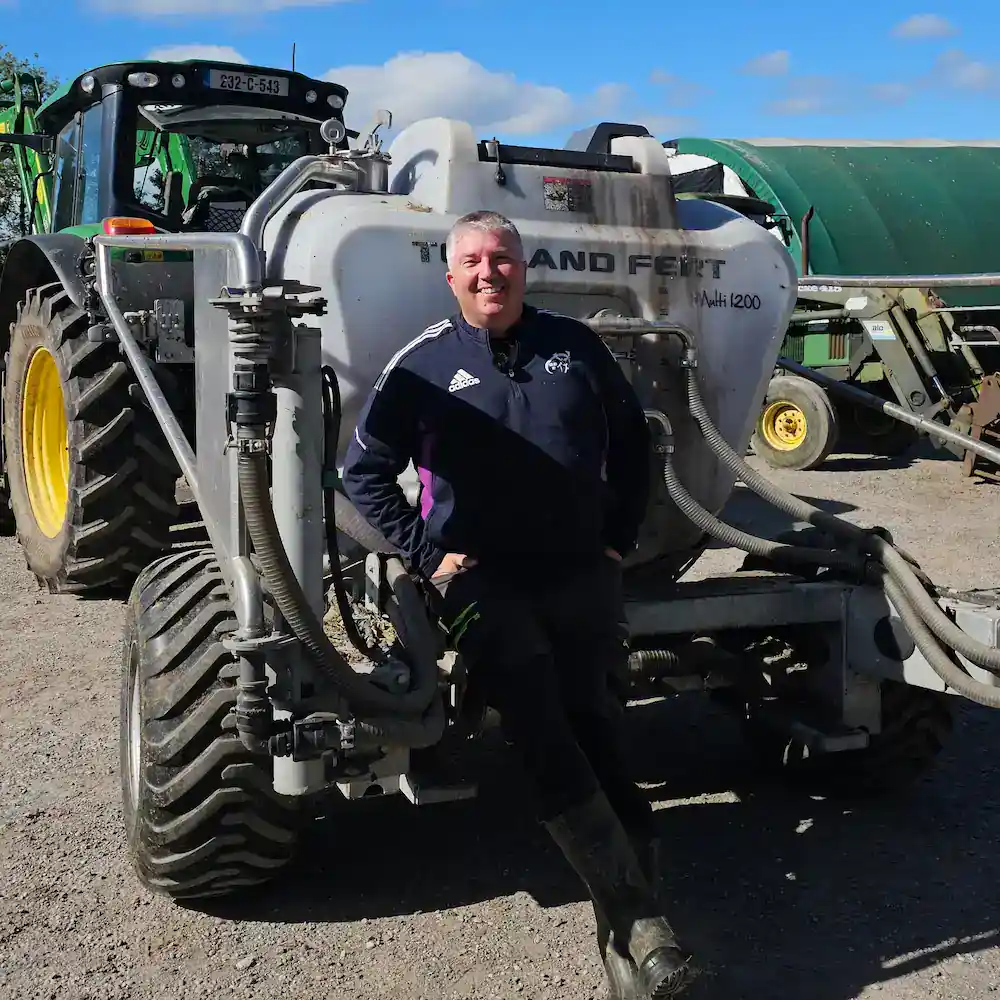
Conor O'Leary
Donoughmore, Ireland
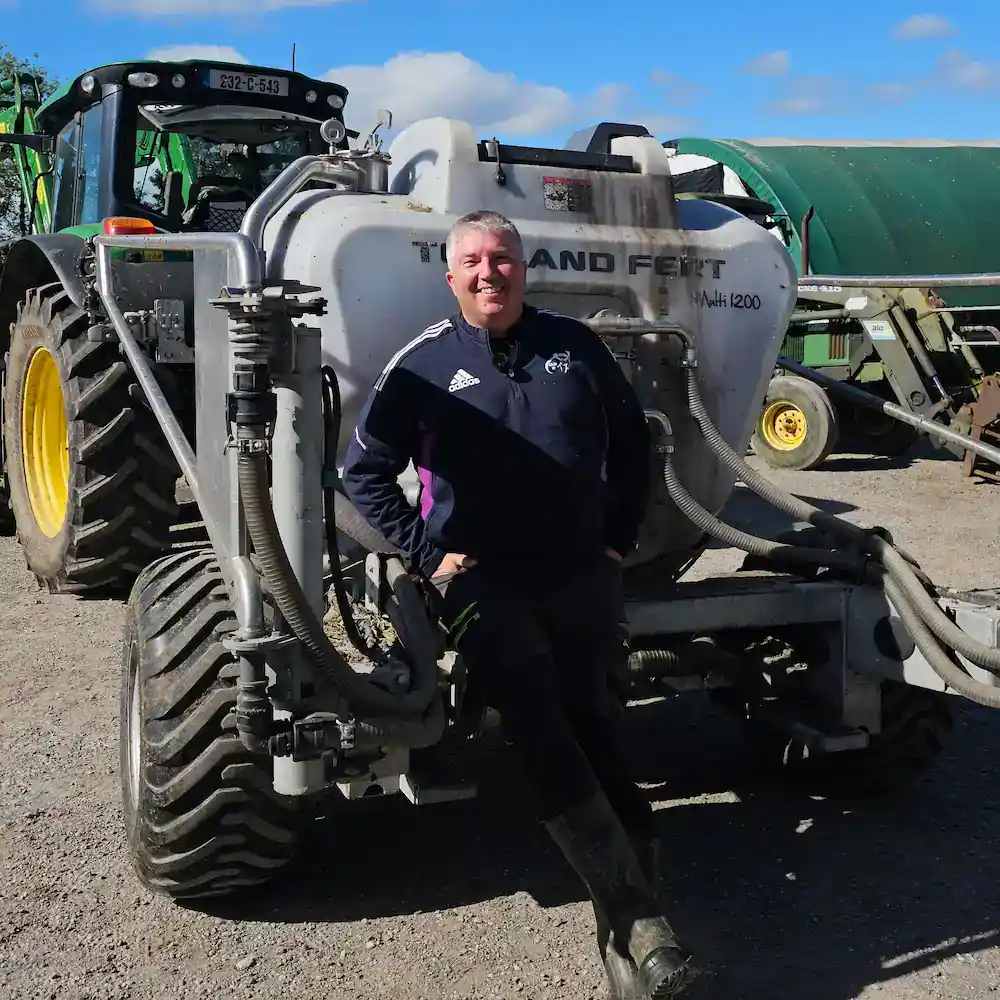
This story was filmed in 2025 and reflects one farmer’s own experience with their Tow and Fert. Every farm is different, so please treat it as a story rather than a forecast for your place.
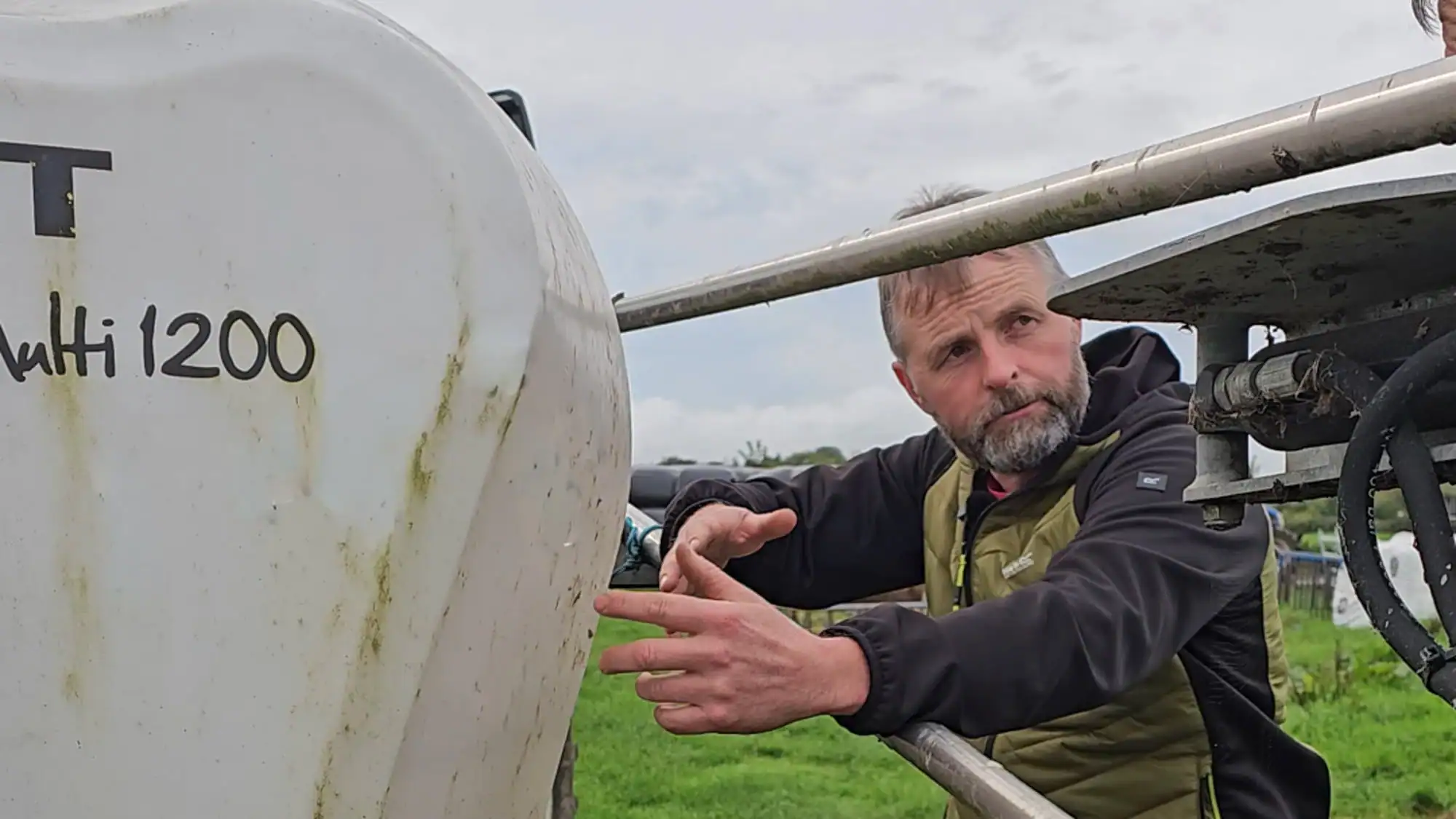
Conor O’Leary, Donoughmore, County Cork. Three full seasons on foliar, in his own words.
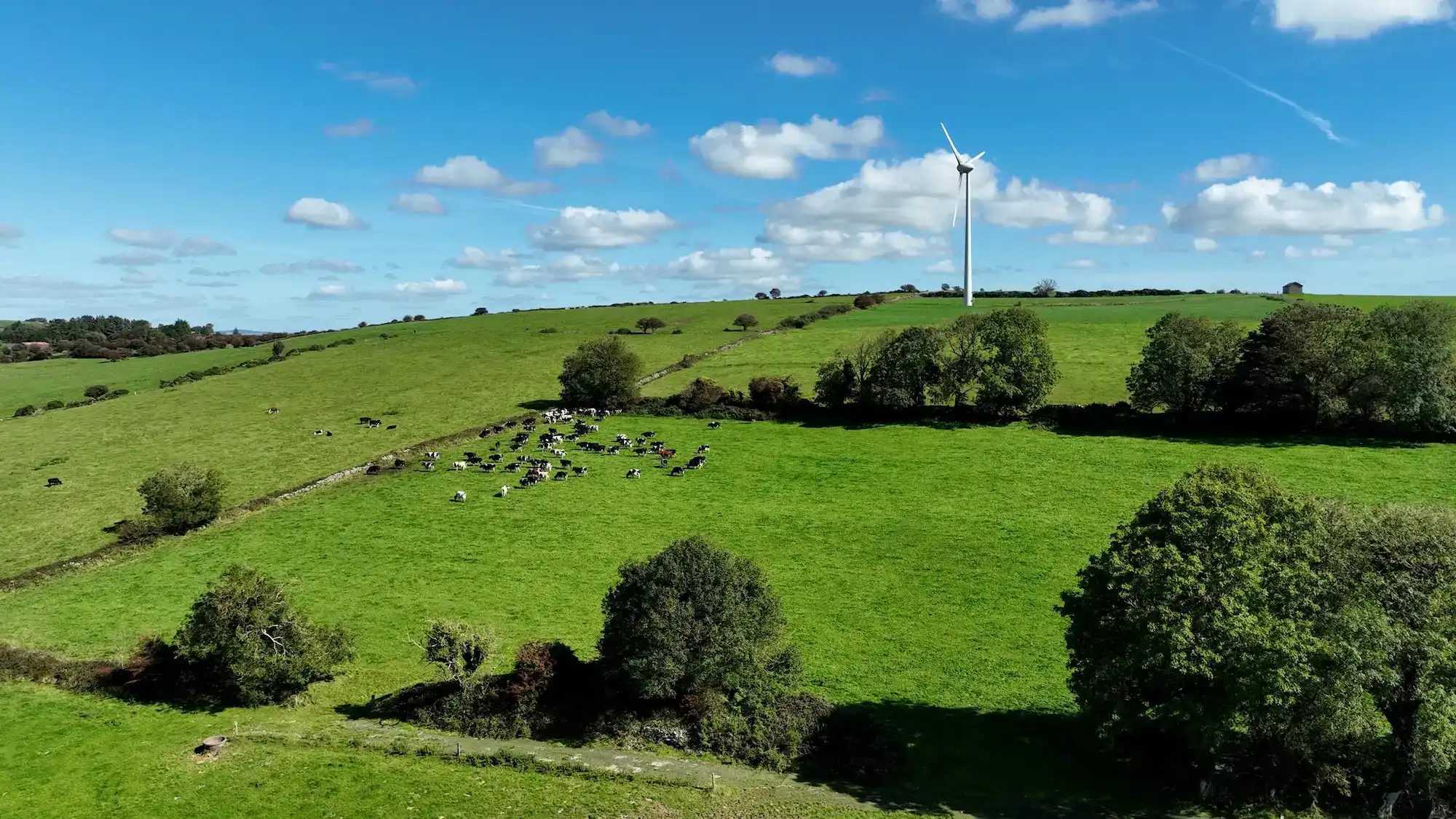
Conor O’Leary farms at Donoughmore, County Cork, with his wife Rina. They milk 120 cows on a 33-hectare grazing platform, and work about 65 hectares overall, made up with bought-in silage.
He watched foliar for years before he bought anything.
I had been looking at it for quite a number of years, particularly around the soil health scenario, reducing nitrogen input. And it probably seemed a little bit out of our reach from a price point of view for some time.
Conor O’Leary
Then the price of urea did the sum for him.
When urea hit a thousand a tonne, it gave us the impetus to move forward with it. Because at that price, at the time, it was only two loads of urea. So we took the plunge immediately.
That was August 2022. Three full seasons behind him now.
It’s been a great success, to be honest.
His nitrogen
Ireland’s nitrogen limits are set in kilos of nitrogen per hectare. Conor was up against his.
Before we went the foliar route we would have been up at the limit. So we would have been around the 220 kilos, probably out of our allowance towards the end of the year. So this is a fundamental change. Last year we came in 120 kilos. And we’re growing on target with everybody else in our discussion groups.
Small print: those are Conor’s figures for his own platform, and the comparison is against the farms in his discussion group. It isn’t a survey, and it isn’t a prediction for any other farm.
The dry
The last two seasons have been hard going in his part of Cork.
I don’t think it’s like a New Zealand drought, and he keeps telling me you don’t know what drought is. But at three stages this summer we’ve been feeding cows silage for 12 hour periods, so it has been pretty significant. But I think this helped us through that. And to date now we’re up around 12 tonnes grown [tonnes of dry matter per hectare].
Granular urea sits on the soil until moisture moves it in. A foliar pass goes on the leaf.
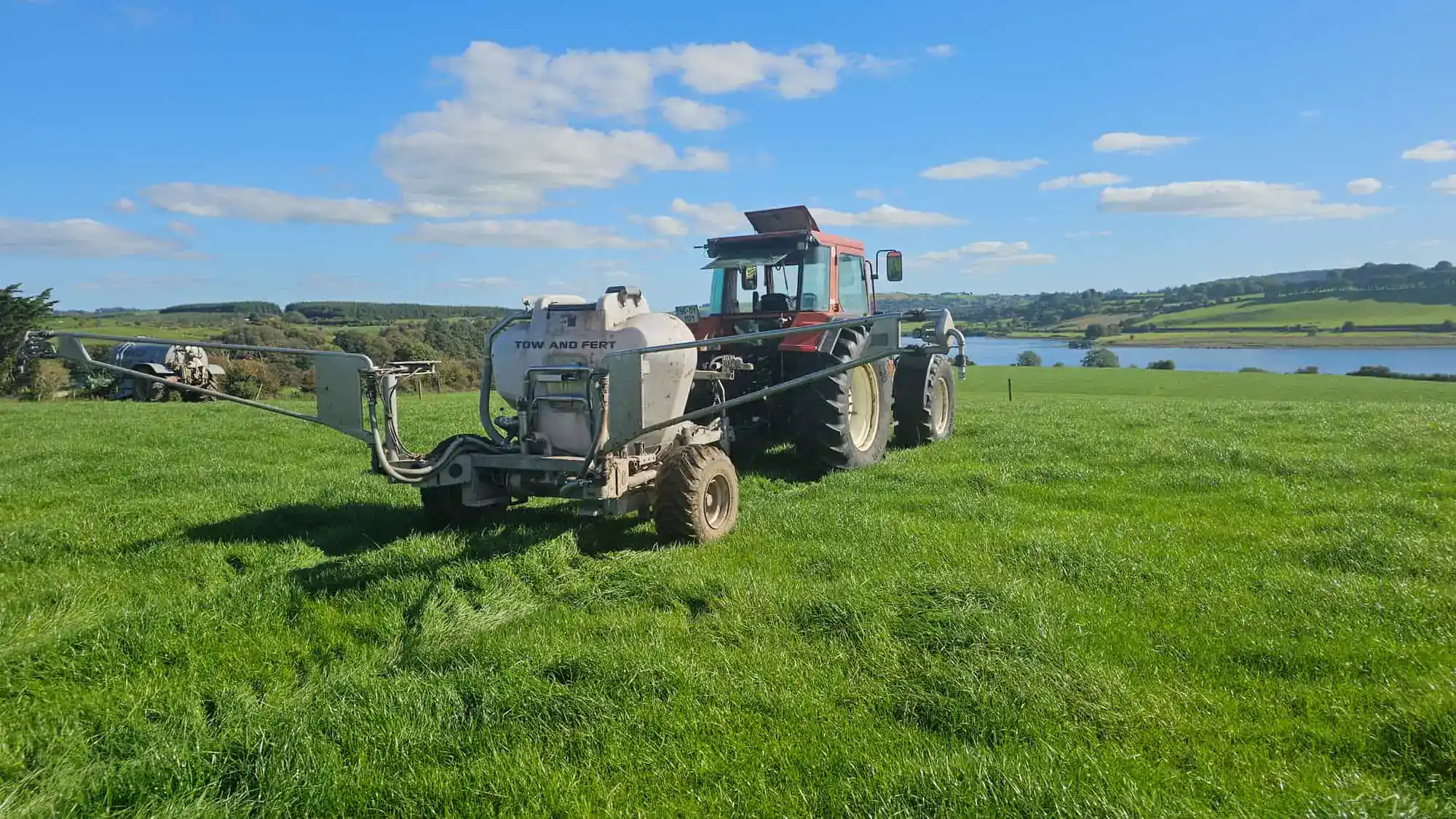
Once we know the weather is turning dry, and it has turned dry for a number of days and we’re heading into a dry period, we can keep going with this machine as long as there’s leaf on the grass. At that time, if we were going granular, it was going to sit from that point on. So we’re still getting it into the plant.
He stops when there’s nothing in it for the plant, and he’s out again as soon as there is.
We do stop when it gets absolutely dry and when there’s going to be no response from the plant. And then the minute we start to come back out of drought, I like to get onto the soil, even at a time it might be misty or light rain. And I think we get a real fast kick as we come back out of the drought. I think we recover from it quicker than we would if we were going on with granular.
Thinking about Tow and Fert?
Talk with a specialist
Tell us about your operation and we’ll match the right model and setup for you.
What he’s noticing
He bought it for the fertiliser bill and the soil. What he talks about now is what he sees walking the farm.
What I noticed, even to go around the farm at the moment, very little apparent dung pats. We have done less topping than we would typically or traditionally have done.
And the beetles.
This year, just delighted to see the amount of beetles within the dung pats. You can see them starting to break down within four days, and by the time the cows come back in there’s little to be seen of the dung pat. Dung beetles is something that we wouldn’t have had here. We are careful of it in terms of what we use anthelmintic-wise.
This year also, and I don’t know what it is, the dung pats are white, with sort of like a fungus cover which starts to come up over them after four days grazing. And by the time they come around in 20 days the dung pat has just disintegrated with a white cover on it. You lift up the top and it’s just all dung beetles underneath. So I do think that’s a fascinating change.
He says there are fewer weeds about too, and he hasn’t sprayed.
Conor’s changed his fertiliser programme, he’s careful with his drenches, and he’s had two dry summers.
The payback on the machine
Conor’s payback period moved with the price of urea. This is where he had it in mid 2025, when we filmed.
I know we moved quickly at the time urea was a thousand a tonne, and I said we’re going to pay for this in 12 months. Urea price did drop, of course it did. And I’m thinking our payback period was probably about two and a half years, probably paid for by now.
Where the rules go
You can see the constant changes here around derogation and nitrate limits. And wherever that goes, no matter how low they pull that, we’re going to be compliant with this machine. And that’s a huge comfort, to know that our business isn’t going to be impacted by a reduction in nitrogen. Some people have to chase land, some people have to do different scenarios of trying to stay compliant. And we can be just compliant with this.
Small print: that’s Conor’s account of his own farm. Coming in under a limit comes down to how you manage your inputs. What the machine does is let you apply less, more often.
How to read Conor’s
One farm in Cork, three seasons, two dry summers, and a farmer who changed how his whole nitrogen programme goes on. What he grew, what he’s seeing in his dung pats and what it cost him is his own account of his own ground. Every farm is different, and Conor’s numbers are his own.
What the machine does is take your fertiliser off the weather window, and carry the rest of your programme out in the same pass.
See if Tow and Fert is the right fit for your farm and where you want to take it. Talk to us today.