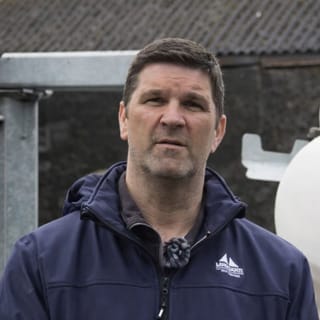
Rob Davies
Carmarthenshire, Wales
This story was filmed in 2023 and reflects one farmer’s own experience with their Tow and Fert. Every farm is different, so please treat it as a story rather than a forecast for your place.
Cutting the fertiliser bill without changing how the farm runs
Farmer: Rob Davies
Location: Carmarthenshire, Wales
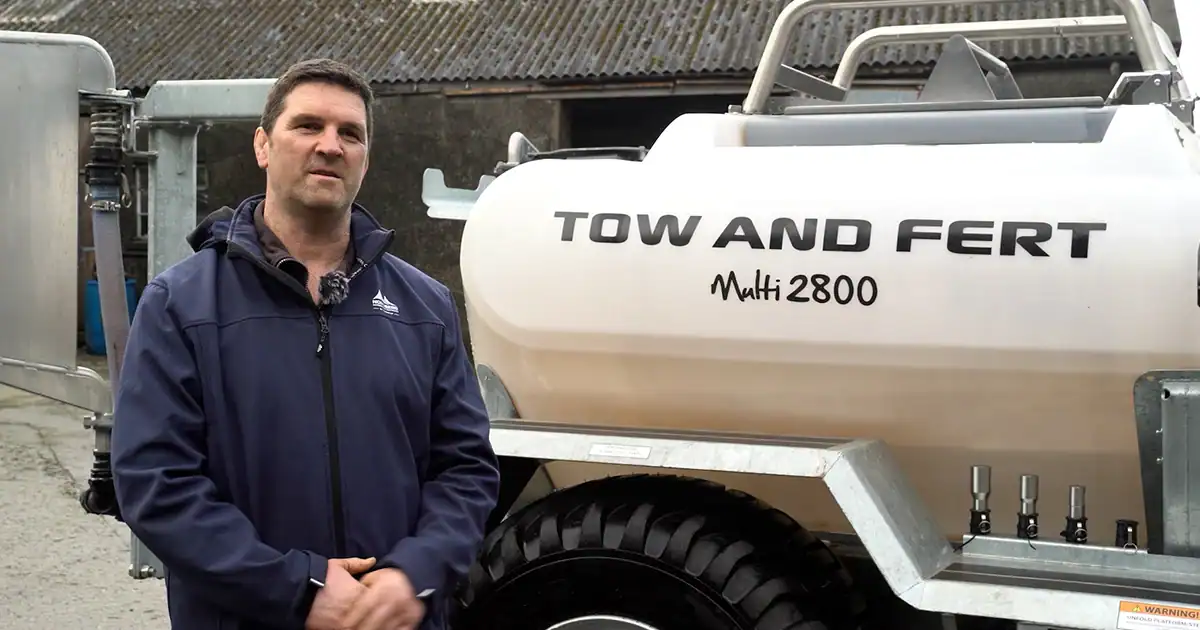
Machine: Tow and Fert Multi 2800
Farming System: Dairy, 250 cows, 350 acres
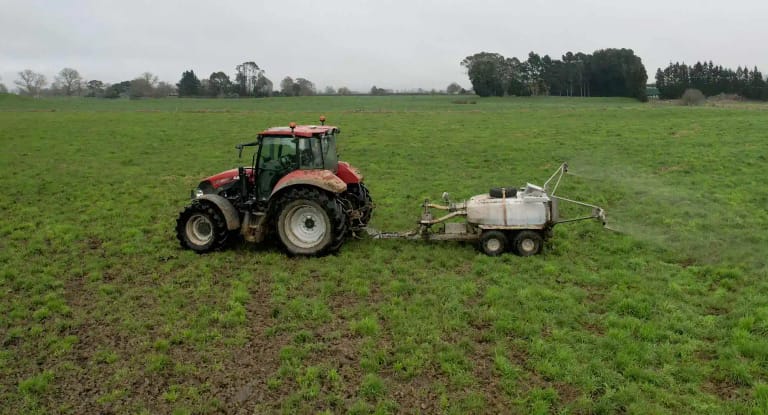
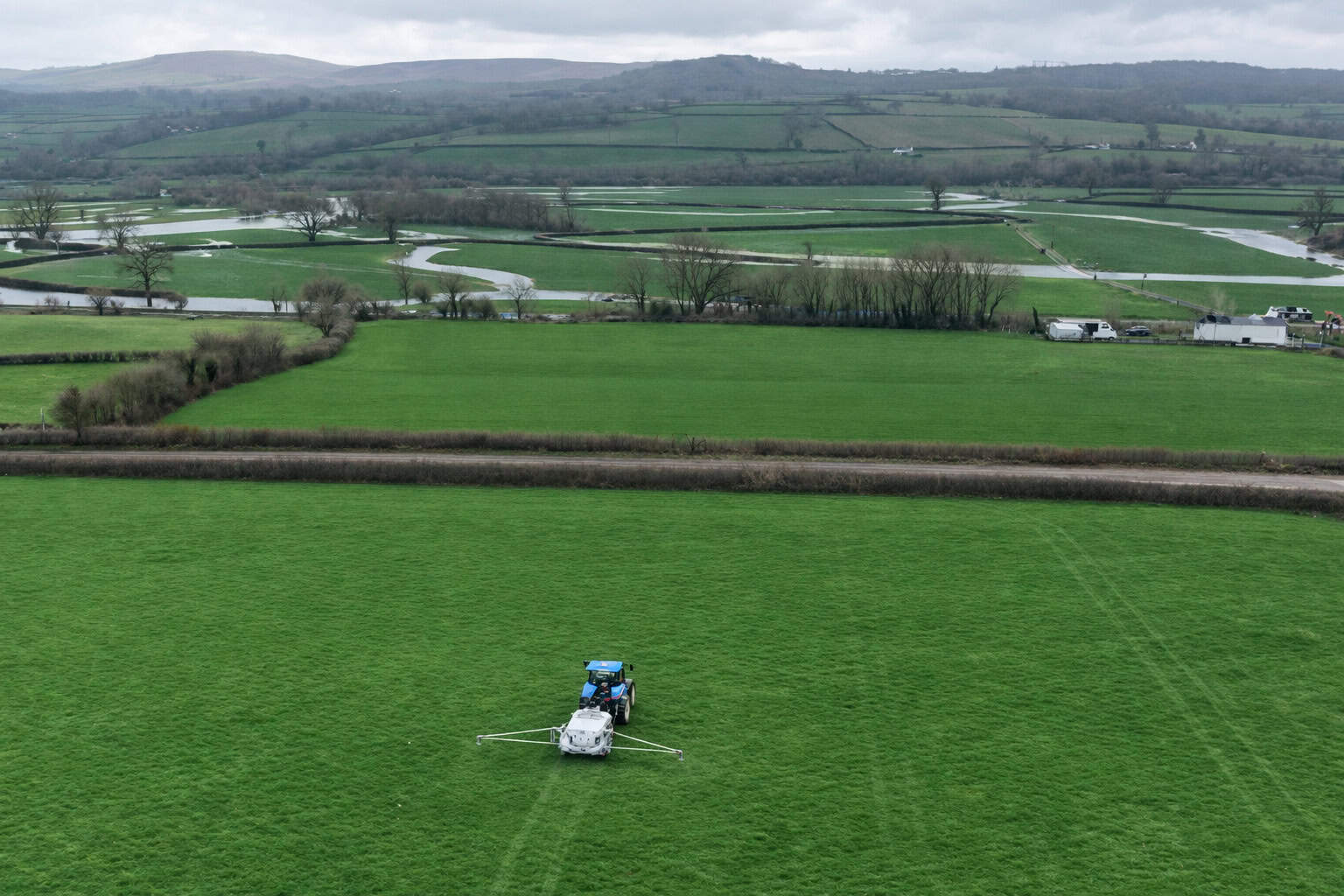
Rob Davies milks 250 cows and rears all his young stock across 350 acres of grassland at Glanrwyth in Carmarthenshire. For him, the appeal of the Tow and Fert wasn’t complexity, it was the opposite. The machine takes ordinary granular fertiliser, mixes it with water in the tub, and turns it into a liquid that can be sprayed straight onto the grass.
Rob came to it through a friend, who had been to a talk on the concept of spraying granular fertiliser onto grass. After looking into it further on YouTube, Rob got in touch with Leslie, Tow and Fert’s contact based in Ireland.
It does what it says on the tin. I’m basically using 40% less fertiliser, and I’m hoping to increase it again this year.
All 350 acres at Glanrwyth get fertiliser applied, whether for silage or grazing, and one tub covers 38 to 40 acres. Rob mixes urea (46% nitrogen), ammonium sulphate and potash, all bought from his regular supplier, using a formula worked out with Leslie.
Thinking about Tow and Fert?
Talk with a specialist
Tell us about your operation and we’ll match the right model and setup for you.
“There’s a wee scale on there to tell us how much I’m putting in, so it’s all mixed in,” he says.
Simplicity has been a big part of the appeal. “The machine is so simple. There’s no electronics, it’s all mechanical, so there’s not much to go wrong,” Rob says. “We haven’t had any problems. But if there are, I’m sure an ordinary fitter would come and sort it all out.”
He’s also found the support easy to access despite the distance. “Working with Leslie has been fantastic. I know he’s over in Ireland, but he’s at the end of the phone, so any problems…”
Rob took delivery of the machine in July last year. “The saving I’ve done this year will pay for the machine, even though fertiliser’s gone back this year. It’s a no-brainer,” he says. “And also using less fertiliser is good for the land, and it’s what people want. You can’t go on chucking more fertiliser on, we’ve got to look at it other ways, and this is another way.”