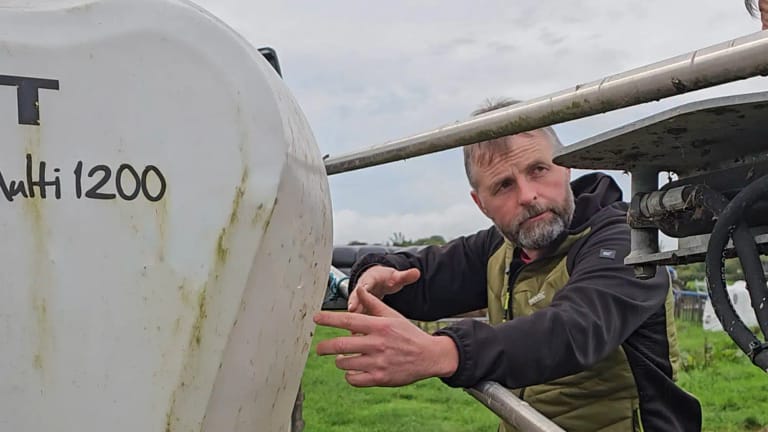
James and Stephen Downey
County Cork, Ireland
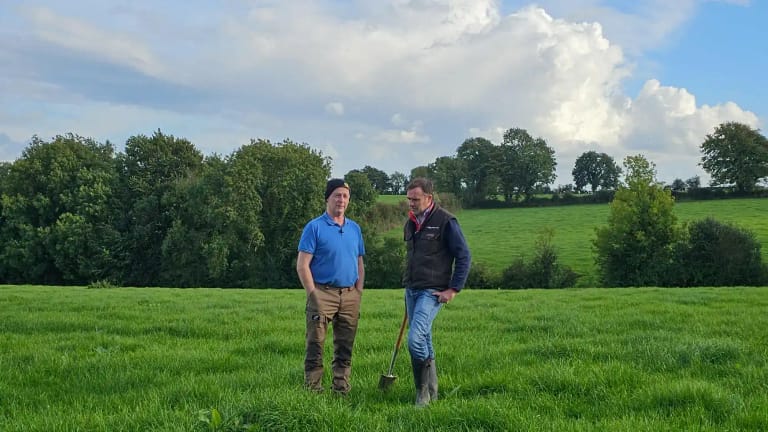
James and Steven Downey enjoying a day outdoors with scenic landscape behind them.
This story was filmed in 2025 and reflects one farmer’s own experience with their Tow and Fert. Every farm is different, so please treat it as a story rather than a forecast for your place.
“Once you get into the rhythm of it, you’ll fly”
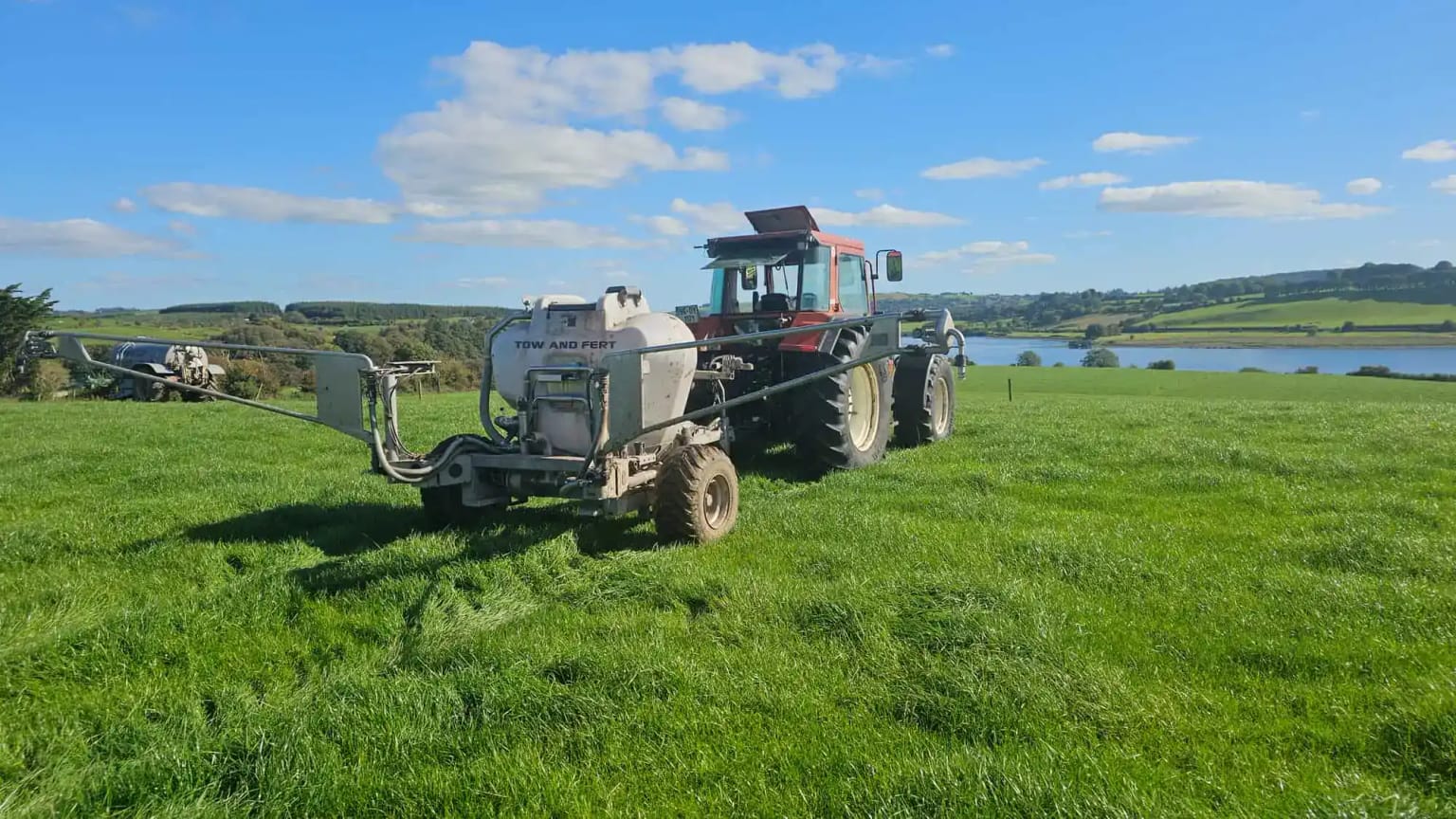
James Downey farms with his father, Stephen, near Macroom, County Cork, on the banks of the River Lee, milking 128 spring-calving cows and rearing all their own calves and heifers. Tightening nitrogen regulations, and a farm that’s often short on rain, both pushed them to look at something other than granular.
We decided to go foliar with all the new regulations and reducing nitrogen and all that coming along. We were on the edge of the 220 there when we were spreading granular and just getting harder and harder to grow grass. We’re very drought-prone here, and just granular just wasn’t suiting the system. Just wasn’t getting the rain to dissolve it and weren’t getting the growth. With our lack of rain, if we put out granular, you’d see it in the ground three weeks later again.
James also points to the efficiency side of switching:
It just seemed there’s a more efficient way of doing it, and to get more efficient use of nitrogen. You’re applying the nitrogen to the soil. There’s a lot of it lost before it even hits the plant. So this way is more efficient and it is probably better for the environment as well.
They’re now in their third season with the Tow and Fert, and James says this is the year it’s clicked.
This year now we’ve really got the hang of it. Season is closed. We’ve purchased all our fertiliser for this year and next year and are still within our nitrogen limits for this year. We reckon between around 130, 135 kilos of N per hectare is what we’ve done. We’ve taken three cuts of silage off the silage blocks. Same with the grazing ground. We were very dry there all summer.
With the dry conditions, ground contact became the more reliable option over foliar spraying:
Thinking about Tow and Fert?
Talk with a specialist
Tell us about your operation and we’ll match the right model and setup for you.
Like I see there, when it’s dry, you’re going to be waiting too long to get the leaf for the foliar. So ground contact, and it’s in straight away. Go there in the evening when the sun isn’t as intense. It’s the way of it rather than trying to bag out and it’s sitting there for three weeks with no rain. At least with this, you put out your 15 units as a bit of dew and it’s gone in. No volatilisation, very little anyway.
We find that the grass is definitely healthier. It’s a better colour. When you put out granular, the first time you’ll get a very dark green, this is usually lighter. The grass is definitely better. And we find any fields that do have a bit of clover, the clover kind of seems to increase in them.
James on the numbers:
Once we’ve saved half it… what’s urea now? 530, 540. Sure this year alone, 20 ton, say roughly more. Sure that’s 10,000 there.
Stephen reckons the machine will be fully paid for by the fourth season:
Definitely in the fourth year it will be paid for.
Alongside the nitrogen, their standard mix through the machine includes humates, sulphur, molasses and a wetting agent, so it’s worth saying that’s the fuller picture behind those changes, not the nitrogen switch on its own.
We do humates, so you’d have your 900 litres of water, your two or three kilos of humates. You’d have your nitrogen in, whatever you’re putting on urea, say 250 kilos or whatever. And you’d have that 1:10 N ratio of sulphur. Put in 15 litres of molasses, and your wetter to keep the grass wet, so the grass can absorb it.
Irish grass is slower to start, but once you get using into the rhythm of it, you’ll fly.