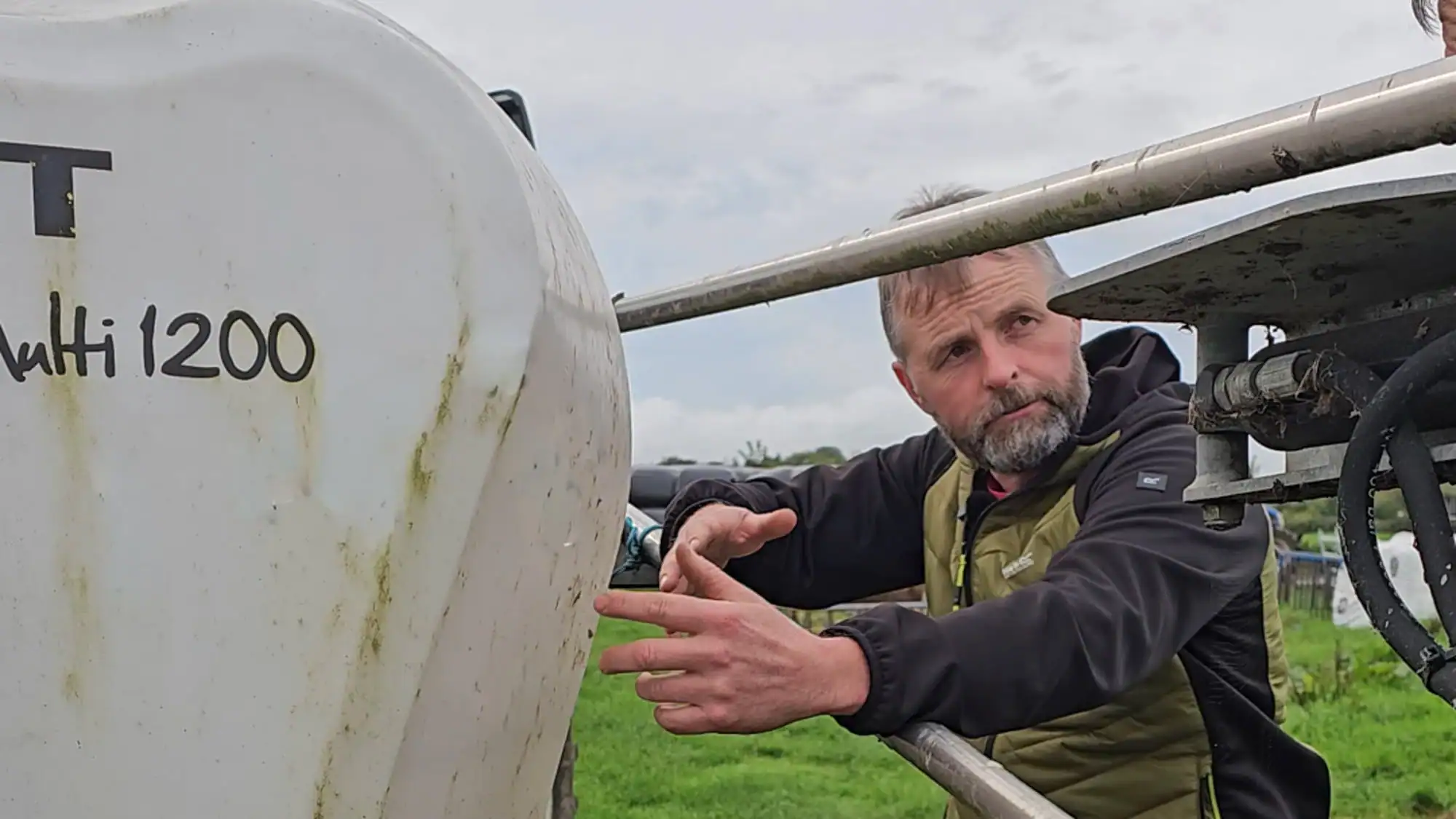
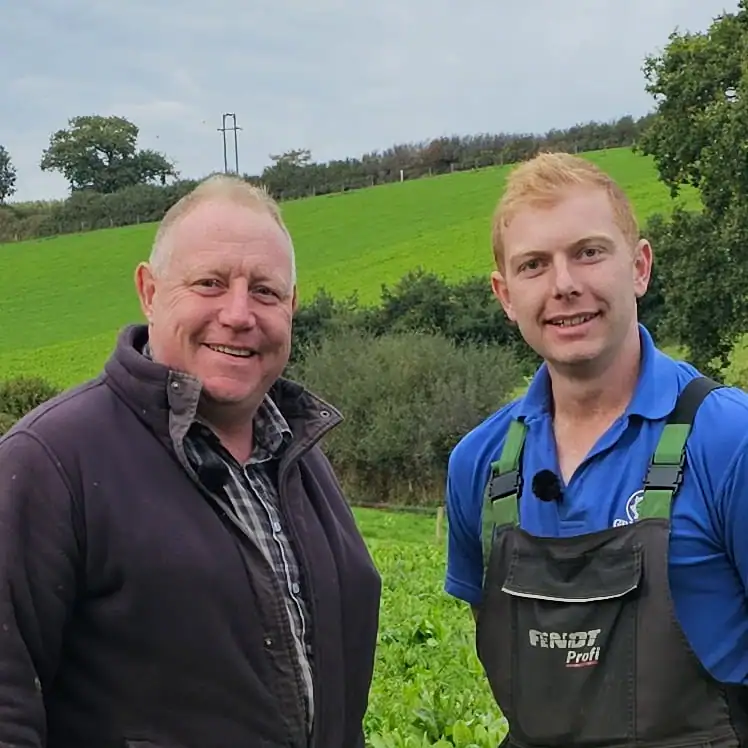
Pete and Henry Wastenage
Devon, England
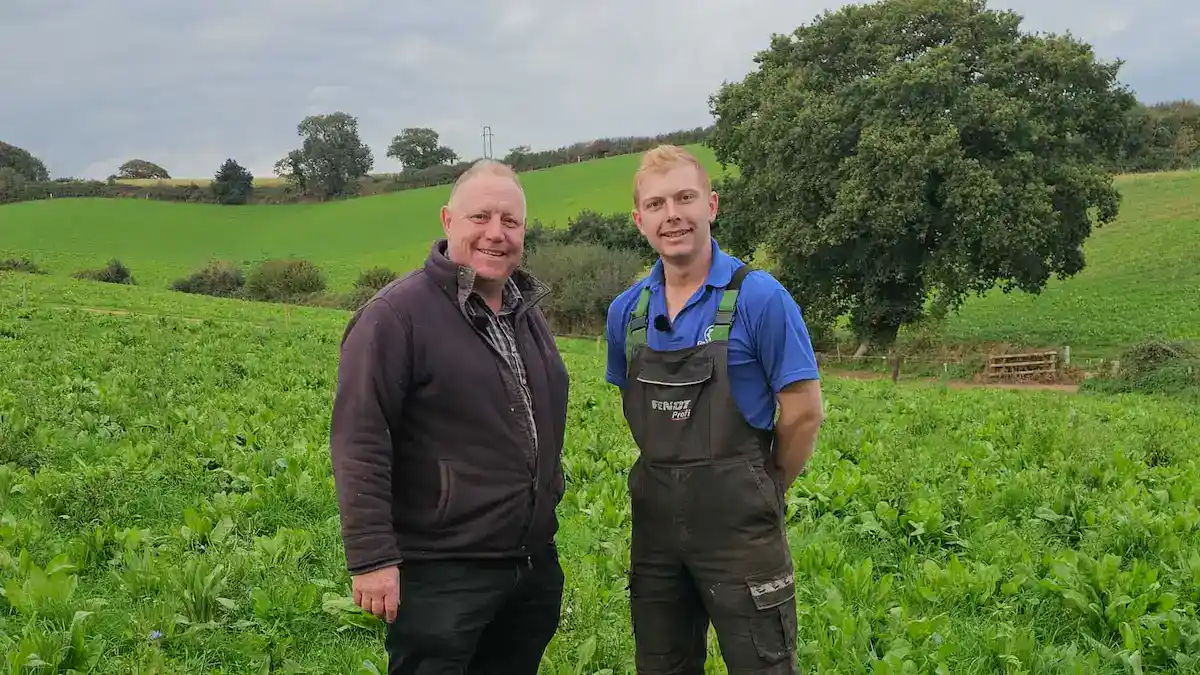
This story was filmed in 2025 and reflects one farmer’s own experience with their Tow and Fert. Every farm is different, so please treat it as a story rather than a forecast for your place.
Nitrogen isn’t always the limiting factor, on Wastenage Farms System
Henry and Pete Wastenage run a multi-sited, block-calving dairy operation in Devon, built around grazed grass making up as much of the cows’ diet as possible.
“Grazed forages make up a huge part of our cows’ diet, and we’re trying to maximise the length of the season as long as we possibly can, ideally grazing 365 days a year if we can.”
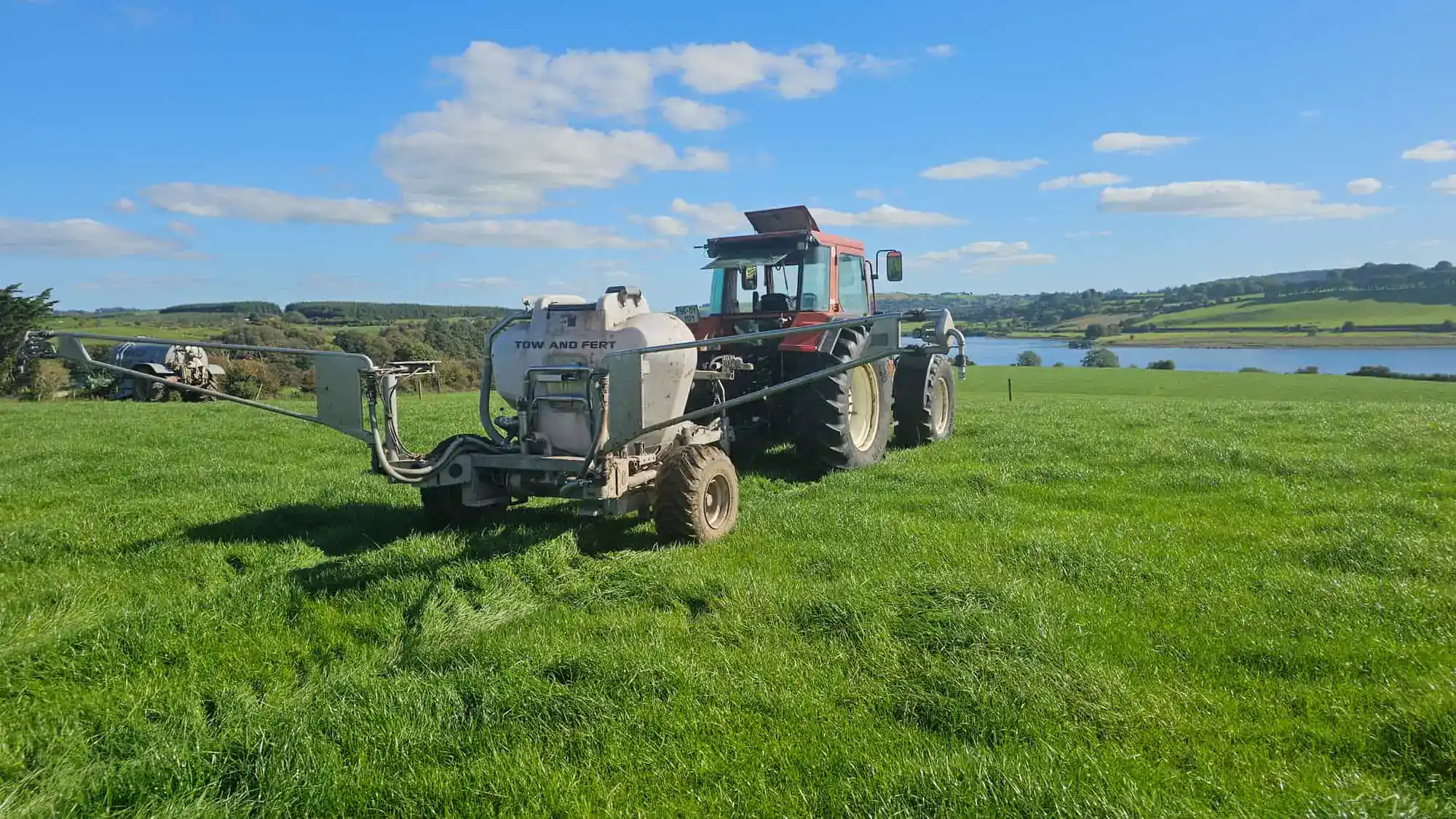
Their old routine followed each grazing round with around 40 kilos of urea sulphur mix, topped up with potash and phosphate as needed. Today, they’re still following the cows on most rounds, but through the Tow and Fert.
“Today we’re doing similar. We’re following the cows on most rounds with the Tow and Fert, but using significantly lower amounts of nitrogen, about 40% of our original usage.”
What drew them to the machine in the first place wasn’t the nitrogen saving on its own, it was the range of things they could put through it.
“It’s versatile enough to take all nutrients, micro elements or the biologicals, so we could make a bespoke mix that would be able to create a system for all the different soil types and different cropping plans we’re growing over.”
Henry and Pete are candid that nitrogen alone was never the whole story on their farm, and that’s shaped how they think about the results they’ve seen.
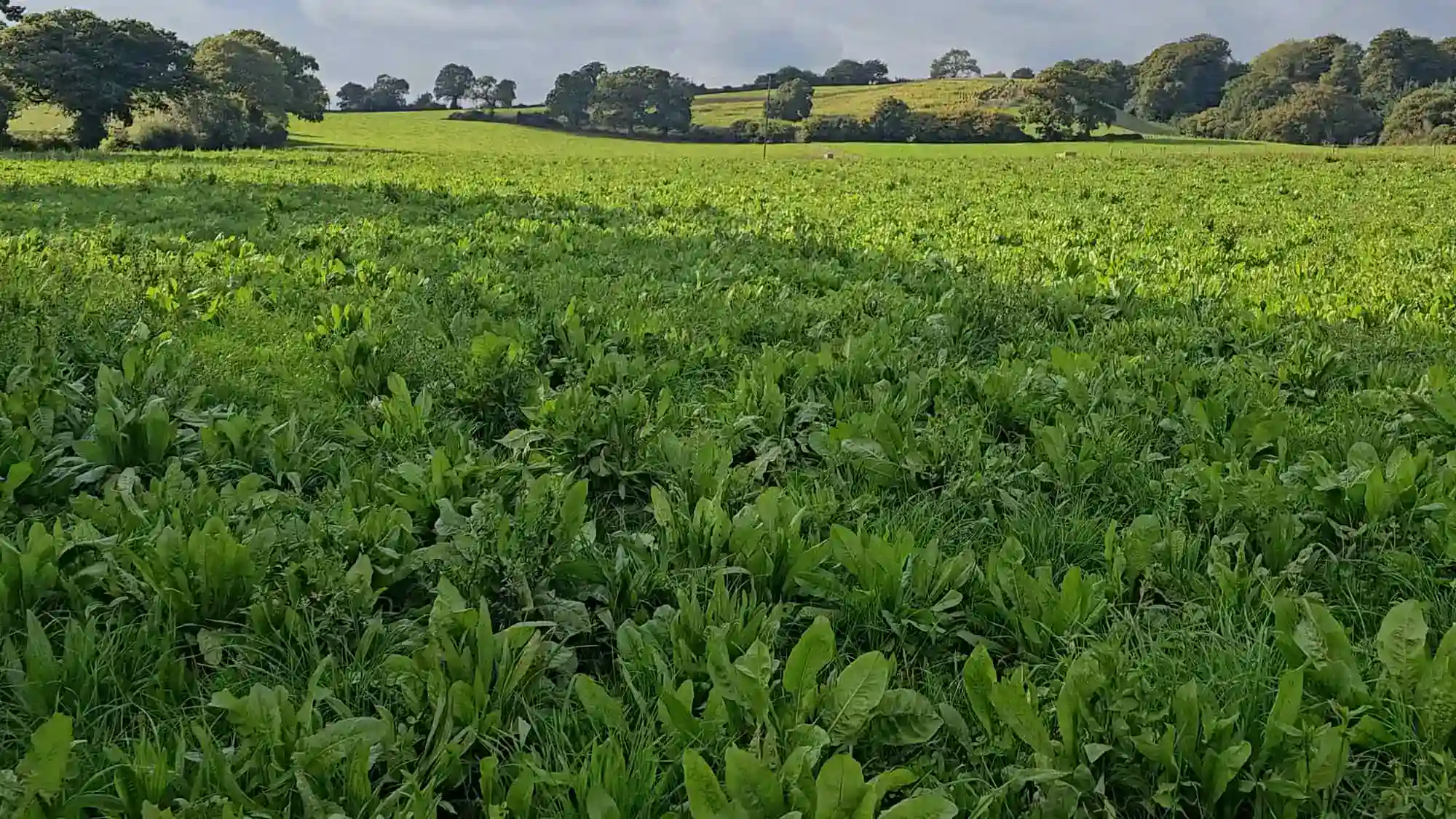
“We don’t actually believe that nitrogen is very often the limiting factor of grass growth, particularly when we’re on a livestock-based system that’s got a lot of legumes in it. The fact that we’re just using nitrogen to boost grass growth didn’t sit very well with us. We’ve been doing more mixed species swards, and we find they grow us a lot more forage going into drier spells, and use nutrients a lot more efficiently.”
That’s an important part of the picture. The mixed species swards and legumes they’ve been building into the farm over recent years are doing real work alongside the machine, so the results below reflect the whole system they’ve put together, not the Tow and Fert in isolation.
To get more precise about what their pastures actually need, Henry and Pete have leaned on sap and tissue testing.
Thinking about Tow and Fert?
Talk with a specialist
Tell us about your operation and we’ll match the right model and setup for you.
“We got way more flexibility by using the Tow and Fert because we can make bespoke mixes to each individual field, or each individual farm for that matter. With a bagged product that goes through a conventional spinner, you’ve got far less choice.”
A couple of seasons in, they’re still refining the mix, but the direction has been encouraging.
“We’re starting to fine-tune the mix, which is quite exciting because we can really see what the limiting factors of this grassland production are and hopefully address its needs. We’ve seen at least a 50% saving in nitrogen usage for the same if not more dry matter production.”
They’re careful not to overstate it, though. Nitrogen still has its place at certain points in the season.
“There are definitely times of the year when we see a response to nitrogen, before the legumes start fixing a lot of nitrogen into the soil, and sometimes on rising soil temperatures. But during the main part of the growing season, we’re seeing significantly less response.”
On the practical side, Henry and Pete admit they were cautious at first about how the machine would compare to a conventional spinner for ground coverage.
“We were slightly cautious that it would be very slow to use, that it wouldn’t cover the land we could use with a conventional spinner spinning at 24, 36 or 48 metres, but it’s definitely proved that it can cover exactly the same amount of acres that a conventional spinner would cover.”
Now set up with a decent water supply and products stored in IBCs ready to lift straight into the machine, they say loading, which was slow at first, is no longer much different in turnaround from what they were used to.
One of the changes they didn’t expect has been how the system’s held up through dry spells, in ground that sits in a rain shadow on the coastal fringe.
“With a conventional system of prilled products, once there was no moisture around, we would’ve been very reluctant, or we wouldn’t have bothered to put any prilled fertiliser on at all. With the Tow and Fert, as long as we’ve got some decent leaf cover and a bit of moisture in the evenings, we’ve been happy to spread through the evenings or the nights. It’s enabled us to grow a significant amount of forage going into spells where we would’ve suffered from drought a lot quicker.”